Hotter


In this game, players, as Samus, set out into four planetary locations to locate eight "octolyths" that, when snagged, will answer the mystery of a strange psychic message broadcasting into the heavens. To do this, players will have to work their way through ruins and structures, hopping up platforms and activating switches to reach the next part of the area. Like Metroid Prime, scanning is key to both the gameplay and unraveling the storyline, as the entire plot of Metroid Prime Hunters unfolds in how players interpret the messages they read.

Level designs are full of action, but they're also full of puzzles as well. Some of them are pretty straightforward (scan a spot on the wall to unlock a door elsewhere in the room), while others are impressively abstract that require a bit more thinking. There are also a decent amount of "morph ball" challenges where players will have to manipulate Samus in ball form in some 2D-style designs. Metroid Prime Hunters strays a bit from the standard Metroid formula of unlocking Samus' special suit powers to reach different parts of the levels. In Hunters, Samus has all of her abilities right from the start and keeps them. The change here is that Samus will discover various weapons of different powers, and each weapon can unlock a different colored door by blasting it. Which means, like most Metroid games, there will be a lot of returning to the same location to open up blockages that you discovered on the first time through.

There are a couple of minor critiques in this adventure, though. First is the apparent laziness of the boss designs - there are only two end level boss characters, and these big guys are recycled several times, with only minor changes to their behavior. Boss battles push the game's precision control - which is good. Since they're reused multiple times, though, it sort of ruins the surprise - which is bad. Plus, every boss battle ends with the trademarked "Metroid Countdown." Even though it's a challenge to race the clock back to your ship before the time runs down, it just feels a bit anticlimactic since it's not much of a surprise when it happens. And when you get back to your ship in time…nothing. No dramatic blast off, no explosions, no nothing. You just made it back to your ship, all safe and sound. Yay.

The single player adventure is easy at first but ramps up in challenge the deeper you go, and when all is said and done it'll take a good dozen-plus hours to get through the challenge the first time. Honestly, we were worried during the course of Metroid Prime Hunters development that the solo outing would be an afterthought to the game's multiplayer focus, but after going through the game's adventure mode we're surprised at how deep and challenging it ended up becoming.

It's clear that NST has a few first-person shooter fans on-staff, as this game is incredibly full-featured in its multiplayer component as well. Metroid Prime: Echoes on the GameCube had a split-screen four player mode that felt more tacked on than integral to the design, but what's been created for Metroid Prime Hunters really fits the design and works well. This competitive mode is a nice combination of Quake and Unreal Tournament on the PC - there are many different bounty hunter characters to choose from, each with their own strengths and weaknesses, and each has a secondary form like Samus' morph ball, which changes up strategy because anyone can roll up into a smaller mode for offensive and defensive attacks.

The game offers a standard point and time-based, solo and team-based Deathmatch mode, but there are plenty of other modes in this component as well. You've got the Metroid equivalent of capture the flag and king of the hill. A personal favorite is "Prime Hunter" mode where players who get the kill are awarded the Prime Hunter tag and must keep it for a set amount of time - the Prime Hunter loses energy constantly, and can only replenish it by continuing to kill other players. The multiplayer component is for as many as four players - more would have been better, naturally, but the level designs are tight enough for this amount of players to have a great time.

Now, you can either play the multiplayer component locally, or - even better than that - hit the Nintendo Wi-Fi Connection service for worldwide competition. The NST team really went all out for this online experience - not only is the game tracking an enormous amount of statistics, but it's also the first DS game to support voice chatting via the system's microphone. Of course, there are limitations in place: players can only form game rooms in the lobby with other players that have been registered to your cartridge via the Friend Code system. On top of this, players can allow "Rivals" to join in, but since "Rivals" can be random players met up in the Worldwide mode, you won't be able to text or voice chat with them - only people you have a Friend Code with can be contacted interactively.

Even with the limitations in place, the online experience doesn't feel all that restrictive, and the amount of focus that's been placed in this section almost puts Metroid Prime Hunters on the PC and console level.

I can still remember the uproar of applause at Nintendo’s press conference back in 2004 at the moment Metroid Prime Hunters made its debut. At the time of its premiere, no one was expecting a handheld to look as good as that game did at that moment. More than a year and a half later, the team still manages that level of impressiveness with one of the most in-depth and beautiful DS titles yet released, which makes it pretty clear that if you give developers plenty of time with a project they can crank out something on the level of current generation production. Metroid Prime Hunters is easily the best handheld first person shooter developed to date, even with its somewhat high learning curve and cramp-inducing control.

Trailer:


Download: 40MB(1 Part)

[NDS] Castlevania: Dawn of Sorrow


This original Nintendo DS design picks up very shortly after the happenings of the last GBA game in the series: Castlevania: Aria of Sorrow. Here, the lead character Soma Cruz, fresh off his victory defeating the undead threat in the previous adventure, now must once again use his skills to stop a cult threatening to give rise to Dracula. Once again. This guy never stays down.

Dawn of Sorrow builds off the gameplay of the GBA adventure, which in itself built off the classic Castlevania structure: platform hopping, enemy slashing, soul stealing, and the occasional puzzle solving. Though it's an adventure game in genre, Castlevania: Dawn of Sorrow is all action, and the Nintendo DS game doesn't disappoint with a never ending onslaught of enemies with different attack patterns and strengths. There are literally dozens of bad guys to hack-n-slash, some of which (like, say, Bigfoot?) aren't exactly in harm's way without a little special and not-so-obvious coaxing.

The "hook" of Dawn of Sorrow is the same hook that Aria of Sorrow featured: Souls. Each enemy has one, and Soma has the ability to take it. Defeated enemies occasionally (and randomly) give up their souls for Soma to acquire, and these souls can be used a variety of different ways depending on the creature. Some offer an offensive technique that can be used , others a special move to reach out-of-the-way items. And some souls can be used to fuse with weapons to create more powerful arms for the fight. For Dawn of Sorrow, the developers give players the ability to have two different "profiles" to make it easy to switch back and forth between Soul settings, an extremely handy idea most likely spawned out of Konami's own Castlevania-inspired GBA spinoff, Shaman King.

Castlevania doesn't exactly explode with amazing DS-based design ideas, but what's here works for the most part. Though the dual screen portion is really just a convenient way of displaying the castle map, but honestly, that really makes things so much handier. Players no longer have to pause the game and switch to the map to see where they are and where they're going -- now it's up there on a permanent basis. The touch screen elements created for the game aren't entirely creative, though there are some cool ideas in place: the best element, the ability to hack at ice walls to create platforms and staircases, isn't used nearly enough in the level design. The more prominent touch screen control comes in the form of "seal drawing" to banish boss characters after defeating them -- as unique as this feature is, it's not all that necessary and actually makes boss fighting, especially towards the end, a little unfair if your penmanship sucks.

In fact, most of the Nintendo DS functionality is utilized modestly in Castlevania: Dawn of Sorrow, but that doesn't hurt the product in the slightest. The designers kept the visuals along the same lines as Aria of Sorrow, looking at the two games side by side it's clear that there's been a vast improvement in both graphic engine and art design. Sprite animations are stunning and fluid, and enemy characters move (and explode) with grace using the DS systems' scaling and rotation abilities…just like the GBA versions, only at a much broader and more impressive scale. The cutscene artwork, however, has been changed drastically from Aria of Sorrow, bringing the wonderful artwork of the GBA version down to the level of "generic Saturday morning Anime" quality. Luckily this style is limited to the occasional talking head cutscene and a full-motion video introduction.

The Castlevania series has been known for its memorable soundtrack accomodating the action, and Dawn of Sorrow definitely doesn't disappoint here. The Nintendo DS hardware is put to fantastic use providing tunes appropriate to the "haunting" setting of Dracula's castle. The dual speaker setup of the handheld system pulls off the game's use of stereo extraordinarily well...right down to the "ping" of the cursor on the map when it moves from one side of the screen to the other. The only thing missing is voice-over for the cutscenes. It's the best sounding handheld Castlevania game ever, and could even come close to beating Symphony of the Night in the audio department.

Added to the design is system link functionality for data trading and multiplayer competition. Just like Aria of Sorrow, players can trade souls from their collection to acquire ones they might not have stumbled upon in the adventure. Added to the design for the first time is a casual, basic multiplayer competition where players can race against each other in a custom castle layout. And a surprising treat: it doesn't matter which version of the game you've purchased: players can link up between the English and Japanese versions with no problems in trade or competition. So impatient importers with the Japanese card, don't fret -- you can hook up with friends with the North American edition.

And even when the single player adventure's over, it's really not. This isn't a spoiler, so read on: along with uncovering multiple endings to the storyline, players can, like in previous GBA games of the Castlevania series, return to the castle as an old-school member of the Belmont family, complete with the dangling whip introduced in Super Castlevania IV. Its an adventure that ends, but the designers give Dawn of Sorrow an enormous amount of legs even after it's completed.

Dawn of Sorrow doesn't take the Castlevania series to enormous new heights on the Nintendo DS, but that's what makes it so fantastic -- the development team has taken what worked on the GBA and built off that foundation, solidifying what worked and what could be improved, all the while offering a modest assortment of new elements specific to the Nintendo DS platform. The final product is what is clearly one of the best Castlevania games in the series, and an absolutely top-notch, beautiful, and most importantly, fun DS game that doesn't try to push a lot of unnecessary touch-screen "gimmicks."

Trailer:


Download: 20MB(1 Part)

[NDS] Call of Duty 4: Modern Warfare


With Call of Duty fever kicking in again, however, Activision decided it was time to bring the franchise to gamers on the go, and solicited the help of developer n-Space (GCN Geist) to shrink the series down to pocket size. For the most part you're getting an experience that feels like a smaller outing of the full-fledged Call of Duty 4 design, as you'll follow the same SAS crew though very similar missions, make use of the same type of gadgets and weaponry, and experience the same "in the heat of the battle" feelings you get on the consoles; just on a much smaller scale. Call of Duty 4 DS makes use of fully-modeled environments, but also falls back to 2D for very minor sections including iron sight gun models (basically your aim mode), and storyboard cut scenes.

For anyone that's seen what DS has done in the world of shooters thus far it should come as no surprise that Call of Duty's production value isn't going to be on par with what you get in a larger, console-like experience. Aside from a few pieces of lighting trickery in Dementium and some superb resource management in Nintendo's own Hunters, the system is pretty elementary as far as 3D goes, so we were pretty surprised to see helicopters cruising overhead, destructible vehicles, morphing levels - though simple overall - and some pretty decent effects to set the mood including lighting strikes, rain, and smoke. In general you'll notice that level skyboxes aren't much more than a straight color or basic pattern, and draw distances won't dazzle players that have seen the technical achievement as something like Brothers in Arms on DS, but the core experience is much more fluid than most of Call of Duty's competition as well. For the most part character models look decent, utilizing a ton of animation and scripted movement, the frame-rate holds at 20+ (usually closer to 30) for the entirety of the adventure - something that can't be said for the choppy aforementioned Brothers in Arms - and the mouse-like stylus control is about as precise as you could ask for on DS.

So while the experience isn't the most technically dazzling effort in pocket FPS history, it puts priority in what counts, and in our opinion flourishes because of it. The Call of Duty feel - instantly noticeable to any veteran of the series - is there, and that's a huge tribute to the game's ability to construct a fluid, entertaining experience onto a smaller platform. Everything from tons of voice over to slick, iron sights-based gameplay is there, as are the epic "out of FPS" moments COD shoots for. Rather than just running from point A to point B gunning the hell out of everything, you'll be disarming bombs with the touch screen, planting explosives or hacking terminals in mini-games, manning .50 Cal machine guns in nests, helicopters, or on the back of a hummer, spotting targets for off-site artillery with binoculars, using night vision for midnight bombing runs, and getting your hands on virtually every expected piece of weaponry from the COD world. There's a ton to do and see in COD DS.

The game does have its issues though. For starters, the experience is generally very dark, so players without a DS Lite will feel like early adopters of the GBA back in 2001. If you've only got the DS Fat, you may want to see the game in action before buying it if at all possible. There's also a large emphasis on double-tap control in the game, with sprinting being up, crouching being down, and iron sights taking a double-tap on the touch screen. When moving around, however, you'll naturally be lifting and taping the touch screen constantly, and without fail you'll end up pulling up into aim mode unintentionally at least a few times. Oddly enough, this also happens in reverse when trying to use the double tap on-screen, as we'll occasionally try to bring up sights with no success.

General bullet power is also a bit odd at times, with single headshots taking an enemy out (expected) while you can put upwards of 12 shots into a person's body with certain weaponry and see them smiling back at you. The intent was obviously to make weapons in the SMG or pistol class weaker than rifles, but in the end it's far too large of a stretch, as you'll feel like you're hammering the heck out of certain enemies for far, far too long. Stick with headshots though - or focus on rifles primarily; a smart tactic anyways - and you're golden. In addition there're also a few odd geometry issues that come up, as players don't seem to fit right through doors at all times, or get caught up on spaces they very well should - and need to - pass through. For the most part the game plays fine, but every once in a while it'll trip up a bit.

As far as multiplayer goes, however, COD is an entertaining experience; we just wanted more. You've got deathmatch, team deathmatch, a hunter vs. prey game (similar to VIP), and capture the flag. Games can be played with up to four players, and if you've got only one cart on-hand you can still download for some basic wireless free-for-all; not too shabby. Each of the games makes use of a computer system as well, which works in two stages. When finding the A computer, you'll initiate map for yourself and any team members. After grabbing point A, point B becomes active, allowing you to add a full radar to your map. This definitely keeps the action a bit more hectic, as you're always fighting not only for kills or points in team games, but also for the technological edge via maps and motion detectors. Before each match you can also switch up your character model, change your weaponry, and tweak limits for each game.

Unfortunately while a game like Hunters that came out well over a year ago supports online play, voice over IP, and stat tracking, COD has no online experience to speak of, which is definitely a downer, as the primary SKU is so amazingly online-focused. To be honest, we'd rather pay full DS price for a multiplayer-centric COD experience than a single player one, as the system could use some impressive online support, and COD can most certainly deliver. As it stands for COD4 for DS, however, you'll need to stick with local wireless play only, which means four players and a few copies to do it right.

Call of Duty 4 for Nintendo DS is a bit of a mixed bag. Developer n-Space went to great lengths to ensure that pocket gamers had a solid first COD experience on the system, and in general that is certainly the case. There’s a ton of diversity in the missions and weapon sets, local four player multiplayer is fun and performs extremely well, and there is more VO in COD than any other DS title we’ve played thus far, teaming with some pretty impressive audio immersion all around. The game plays well for the most part, but small bugs and glitches keep it from being top notch, as players will often get stuck on odd geometry, the double-tap controls for the touch screen cause a few issues when trying to use iron sights, and enemies seem to take insane amounts of fire at times without dying.

Trailer:


Download: 35MB(1 Part)

[NDS] Age of Empires: Mythologies


Players take control of three different cultures, including Greek, Egyptian, and Norse, including multiple hero units for each, and gods that can be prayed to for uber-attacks on the battlefield. The general gameplay feels nearly identical to what it did last time around, playing out more like a game of Advance Wars than classic Age of Empires, but there's an insane amount of depth to explore. Each of the three cultures play unique from each other, with different units for each including things like camelry, and unique new myth units such as Sphynx, scorpion men, or scarabs.

What has always made the Age of Empires series impressive, and it carried over to DS the first time around (and again now), is the franchise's attention to economy, and the concept of "aging up" from time period to time period. While you may only have the technology to train spearmen at first, you'll soon gain more technology for stronger militia. On-foot archers become horse-clad chariots, and siege weaponry is developed hand-in-hand with the town's evolution, so as long as you research and age up, you'll be decades ahead of the competition, hitting them with superior firepower while they putter around their pre-wheel cavemen camps.

Not only do players have the main cultures to learn about, ages to research, and the constant balance of food, gold, buildings (for a full-on tech system), and hero units, but also relics which can be used to assign heroes and gain more boosts for your biggest powerhouses on the field. Relics can include anything from faster hero power regeneration, more attack power, higher hit points, or the like, and more relics can be unlocked for play within the game's store. Of course you've also got the balance system included this time around, so certain units are stronger and weaker compared to others, so a reliance on heroes alone won't win you battles. It's a very strategic, extremely diverse experience, be it in the form of building, aging up, supporting crop fields with extra farms (or on the flipside, adding more gold mines around a specific dig site), or destroying random NPC characters across the map to gain more relics which power your team.

The god power system is also another new addition this time around, allowing heroes the ability to build obelisks which honor specific gods in the game. Based on the god you assign, you can research abilities for them to execute in game. This includes everything from a blizzard, smashing tidal wave, or swarm of locus to wipe out enemy farms. Now not only can you research better gear for your specific units, upgrade global tech levels which include more HP or defense for units, but also power up your affinity of god abilities, letting you destroy the competition in even more diverse ways. Of course each research ability costs cash, food, and/or god points, and since only one can be researched per turn, even more strategy goes into deciding exactly how you're going to execute on the battlefield. It's a much deeper experience overall.

Where we really hit the game the first time around on DS was in the battle visuals, and the lack of online multipayer. Both have been addressed this time around, and it makes for a much stronger offering overall. In-game visuals have gotten a huge bump, now with stronger models for battle animations and on-field movement, the interface is much more appealing, now with a polished Mythologies theme from the original PC game, as well as concept art and scrolling backdrops throughout the menus, and more diversity in the in-game levels, including snow, rain, desert, fields, and the like. Where the last game was "good despite its visuals," this one is made stronger due to the visual look.

Multiplayer, as we noted above, has also become a much larger offering, now including not only online, but also hot seat multiplayer (trade the DS around from person to person), a full-on wireless mode for people with multiple copies of the game, and a wireless DS download mode as well. This is a huge offering for DS's multiplayer games this year, and one of the more robust multiplayer games on the system. To add to the experience , you can also have AI join in during multiplayer matches, make use of any heroes, gods, unlocked relics, and maps when playing any type of match, and unlock a huge list of added content just from playing the game and buying them from the store. The unlockables section includes 12 new maps, three additional heroes not found in regular multiplayer, 18 new relics to power up heroes, and nine additional gods for multiplayer play, all of which are unlocked using a "myth point" system. In addition, single and multiplayer gamers alike can gain points for the 33 in-game achievements, which include everything from finishing tutorials to beating the full single player campaigns with each culture, or dominating online. This is one of the most robust DS games out there.

Age of Empires: Age of Kings released two years ago, and it has since been an unsung hero on DS. Now we’ve got the sequel out, complete with a new publisher, new developer, and expanded design. The end result? A game that rivals that of Advance Wars, Final Fantasy Tactics Advance 2, and Disgaea. Age of Empires has returned to DS, and with it comes more units, more strategy, just as strong of an economy system, and even more to explore within the package. Multi-card multiplayer, single card multiplayer, hot seat play, Wi-Fi, three campaigns, achievements, over 40 unlockables, and 24 maps. The battle animations are stronger this year, the overall visuals have received a significant bump, there’s more VO, and far more to see and do within the game. Age of Empires: Mythologies is indisputably one of the most robust, rewarding, and entertaining strategy games on DS. It needs to be supported, and it deserves to succeed. We hope to see the series back again on DS, complete with more than three playable cultures, more customization (map editor?) and even more of what has made this series great. Until then, we’ve got more than enough to see and do in Mythologies.

Trailer:


Download: 105MB(1 Part)

[Wallpapers] Neon Wallpapers


Name collection: Neon Wallpapers
Uploaded by: 7Download.org
Other: 90 pics - 1920X1200

Download: 26MB(1 Part)

[NDS] Professor Layton and the Diabolical Box


Even though this is the second game in the series, Level-5 treats it as a standalone experience. If you were one of the few people who skipped out on Curious Village, you won't be in the dark with The Diabolical Box because the designers and script writers do a fantastic job reintroducing you to the characters. The story – a mysterious item called the Elysian Box has killed one of the Professor's colleagues and sends him on a mystery through multiple villages across Europe – is incredibly engrossing even if some of the clues become obvious to the player before they do the Professor.

And that's exactly what I love most about the Professor Layton series: the presentation. The game's Japanese developed but the art designers go with a more European flavor for the game's art style – a little anime flavor sneaks in there, which is unavoidable considering the territory, but I really enjoy the non-traditional animation style for a Japanese-developed game. The full-motion cutscenes are incredibly well produced, and there are plenty of them throughout the course of the 12-hour adventure. It's no wonder why the developer has expanded the Professor Layton series into feature films in Japan: I would totally watch an hour and a half of the Professor as he works his magic, especially if it looks this good and is acted as well as it is in the DS games.

It is disappointing that this awesome presentation doesn't extend all the way through the experience. Cartridge space is a premium, after all, and professional-grade animation is a premium that the team might not have been able to afford. So for most of the story the tale of Professor Layton and the Diabolical Box is told through more traditional "talking head" cutscenes. Much of these cutscenes continue the superbly acted voiceovers, but it's awkward to hear the audio cut out for no other reason than there was no recorded dialogue for those spoken words. Again, it must have been a cartridge space compromise.

But the meat of the game is the puzzle solving. Exactly as it was done in Curious Village, the core gameplay of Diabolical Village is to wander around in a point-and-click style interface and solve puzzles that happen to catch Professor Layton's fancy. These puzzles can simply appear as the Professor reminisces about an item that he encounters, or when he meets up with someone in his adventure that has something he wants. Professor Layton's world is chock full of mind bending puzzles, and in The Diabolical Box there are close to 150 puzzles throughout the course of the game's 12+ hour adventure. The game gives you some sense of replay value in the form of unlocking the puzzles outside of the main quest, but this is almost entirely pointless as once you've solved the puzzle you know the answer. Many puzzles are multiple choice -- some which only have two choices – so these are simply useless once you've figured out the solution.

But Diabolical Box does add a few cool evergreen puzzles into the mix. Early in the quest you'll come into possession of a chef's hamster. Throughout the quest you'll earn items for this hamster, which is a puzzle in disguise: the challenge is to get the hamster to exercise, and by placing items in his path he'll be attracted to them and start walking. The task: try to get him to walk as many steps as you can to make him all fit. And, like the previous game, you can connect your game to the Nintendo Wi-Fi Connection service to unlock puzzles on a weekly basis.

The sheer variety of the puzzles ensures that the adventure doesn't get boring. While you'll certainly encounter repeat designs, these repeats are few and far between, and many times when they are repeated they're supplemental challenges that don't need to be solved to finish the quest.

Because this is a standalone game that doesn't really stray very far from the established formula of Professor Layton and the Curious Village, if you did happen to skip over the first game in favor of Diabolical Box, it won't feel like a step backwards to revisit the original game if you decide you want more. The puzzles in Diabolical Box are just as challenging and are completely different in designs and subject matter, so you won't really experience any repeats.

But like the original game, Diabolical Box has the same design "flaw" of being able to cheat very, very easily: you have the ability to solve the puzzle with mistakes and learn the solution, then reset the system and restart that save file to solve the puzzle with the learned knowledge without penalty. The fact that you have to sift through a recap of the story's events might be discouragement enough – almost like an Animal Crossing-like Mr. Resetti – but the cheating ability is there regardless. I will say that was less apt to cheat in the second game for my review because I was simply enjoying the storyline – I didn't care that my score was being docked for mistakes.

Even though I say in my review that this game is essentially more of the same stuff that’s in Curious Village, I will freely admit that I had a better time playing this sequel than the original game. Professor Layton and the Diabolical Box is an extremely enjoyable, laid back DS experience with some pretty challenging and clever puzzles to experience. The professor is a cool cat, and his popularity needs to grow in this country. Let’s keep it going, Nintendo!

Trailer:


Download: 92MB(1 Part)

[Music Album] World Cup 2010 V.a.


Title: World Cup 2010 V.a.
Artist: Various Artist
Songs:
12
Timing: 40 minutes
Made by: NhoxWhite (7Download.Org)

Tracklist:


Click to view full screen


Download: 60MB(1 Part)

[Walkthrough] Machinarium

Walkthrough: 8 Parts

Part 1:

Part 2:

Part 3:

Part 4:

Part 5:

Part 6:

Part 7:

Part 8:

[Games Pc] Machinarium


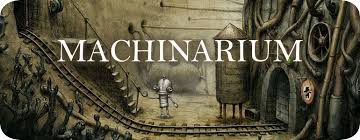
Machinarium took the prize for "Excellence in Visual Art" at this year's Independent Game Festival, and it only takes one look to understand why. It more resembles a moving graphic novel than a game, stuffed with hand drawn art that bubbles with life and personality. A Nightmare Before Christmas fans will eat this up. Gameplay-wise it's an old-school point-and-click adventure, and I mean old-school in the sense that it is mercilessly difficult. Machinarium will confound and frustrate you, but it's worth it to experience one of the most beautiful and endearing games of the year.

You command a cute little robot who is unceremoniously thrown out of his city with the trash. By pointing and clicking through the bleak steampunkish environment you can return him to his home, reunite him with his girlfriend, and even prevent a terrorist attack. Our hero has the ability to stretch and scrunch his body, making for some interesting puzzle opportunities. There is no dialogue but when the robot encounters someone he knows a thought bubble will appear that shows a short movie of a memory he has. There is a wonderful sense of whimsy despite the chilly atmosphere. The first few scenes are brief, one-screen challenges, but Machinarium soon opens up so that you may have to wander through multiple areas to find a solution.

Like many games in the genre you'll gather items along the way, which the robot will swallow and store until needed. When an object has served its purpose the game will remove it from your possession in some amusing way so that you aren't left trying to use it in the wrong situation. It also keeps you from accumulating a jumble of items to sort through when working on a puzzle.

The brutal difficulty will likely have you stumped even in the earlier scenes. A couple bones have been thrown to us by the developers, though. In the upper right corner of the screen you'll find a light bulb. Click it and a thought bubble will appear above the robot indicating the ultimate goal for that particular room. This is just a hint, though, and it won't reveal how to reach that goal. More useful is the built-in walkthrough that, while admittedly suspect, ends up being a necessary evil in this challenging game. Next to the aforementioned light bulb is a tome that can be clicked to initiate a brief 2D shooter mini-game. Complete that and you'll be granted a detailed visual walkthrough of the scene you are currently in.

The mini-game isn't arduous – it's more tedious and obnoxious than anything. It takes a couple minutes to complete, so it's really just an obstacle keeping you from overusing the walkthrough. Sometimes the hint book won't even spell everything out for you, so it's really not a cheat system. While this is a rather inventive way of helping players through the game, the fact that Machinarium needs a built-in walkthrough means the difficulty is cranked up a little too high. The developers have crafted a fascinating world here, and it would be more enjoyable to explore if we weren't being stumped so often.

There are also a couple interface issues that keep the gameplay from being as excellent as the visuals. The robot can only investigate things in his immediate vicinity, so you have to wait for him to walk clear across the room if the object in question is over there. Checking each room for all possible interactivity can be a little tiresome. And once he's in motion you can't alter his course until he's reached his goal.

Despite these complaints, Machinarium is still worth a playthrough. The visuals are stunning, and this little robot is able to communicate more emotion to the player than most videogame characters, despite the utter lack of dialogue. The music is also some of the best I've ever heard in a game. It's a subtle electronic soundscape that constantly shifts between making the player uneasy and calm.

Machinarium is a must-play for point-and-click fans. It hearkens back to the early days of the genre with a brutal level of difficulty that will keep you puzzled for hours. This difficulty is also the game's weakness, though, and some players will be frustrated when they just want to explore this fascinating world. But it is visually stunning, has some of the best audio you'll ever hear in a game, and is surprisingly emotional. Just come ready for a challenge.

Minimum system requirements:
* Operating System: WinXP/Vista/7
Minimum requirements:
* Processor: 1.8 GHz
* Memory: 1.0 MB
* Video: 64 MB
* Free space: 250 MB
* Screen resolution: 1024 x 768
DirectX 9.0c

Trailer:


Download: 502MB(3 Part)


See also
Walkthrough of Machinarium --> Click Here <--

[Games PC] Gish


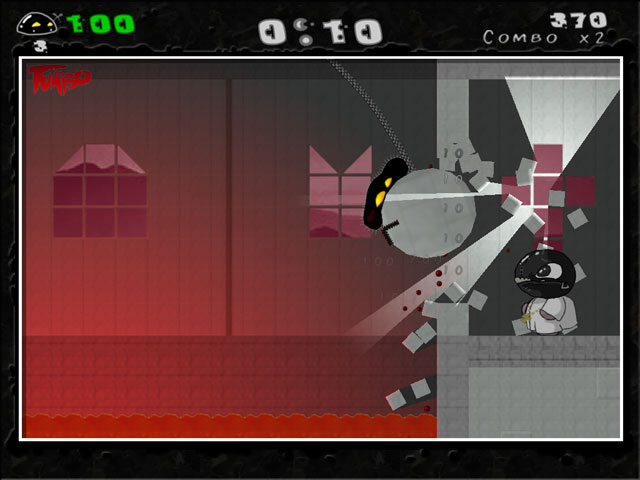
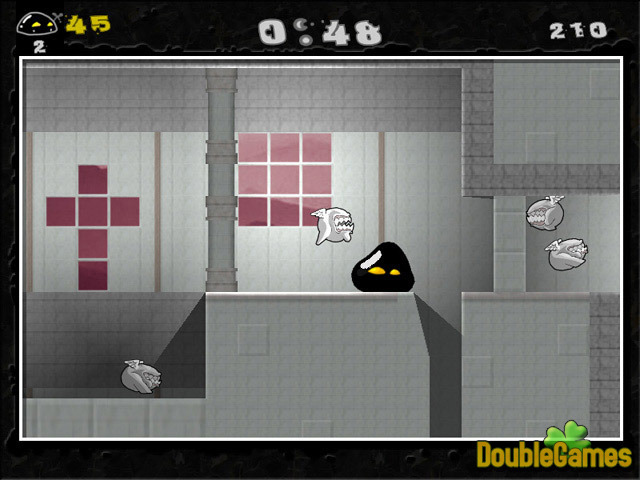
Gish isn't your average hero, in fact he's not your average anything.. see Gish is a ball of tar. A Sunday stroll with his lady friend Brea goes awry when a shadowy figure emerges from an open man hole and pulls Brea into the ground below. Following Brea's calls for help Gish suddenly finds himself in the subterranean sewers of Dross, a long forgotten city filled with twisting corridors, evil traps and some of the most demented creatures imaginable. With his gelatinous structure as his only means of defense Gish must follow the echoing cries of his damsel in distress deep into the earth bellow. What freakish creatures dwell in this subterranean land? Who is Brea's captor? And just how far down does the rabbit hole go?


Minimum system requirements:
* Windows 98/ME/2000/XP/Vista, Linux or OSX 10.1+
* AMD,Intel or G3 1000+ Mhz processor
* OpenGL Compatible 3D Graphics adaptor (ATI, NVIDIA, Intel, etc.) with 32 mb of video memory
* 256MB of memory

Screenshot:


Trailer:


Download: 47MB(1 Part)